The Corporation Tax change altered the company side of a salary-and-dividend decision before any money reached the director. It arrived alongside a smaller dividend allowance, a mid-year National Insurance cut and wider regional differences in salary tax.
The figures cover a sole owner-director taking salary and dividends between 6 April 2023 and 5 April 2024. Corporation Tax changed five days earlier, on 1 April 2023.
Why £100,000 of profit no longer meant 19% tax
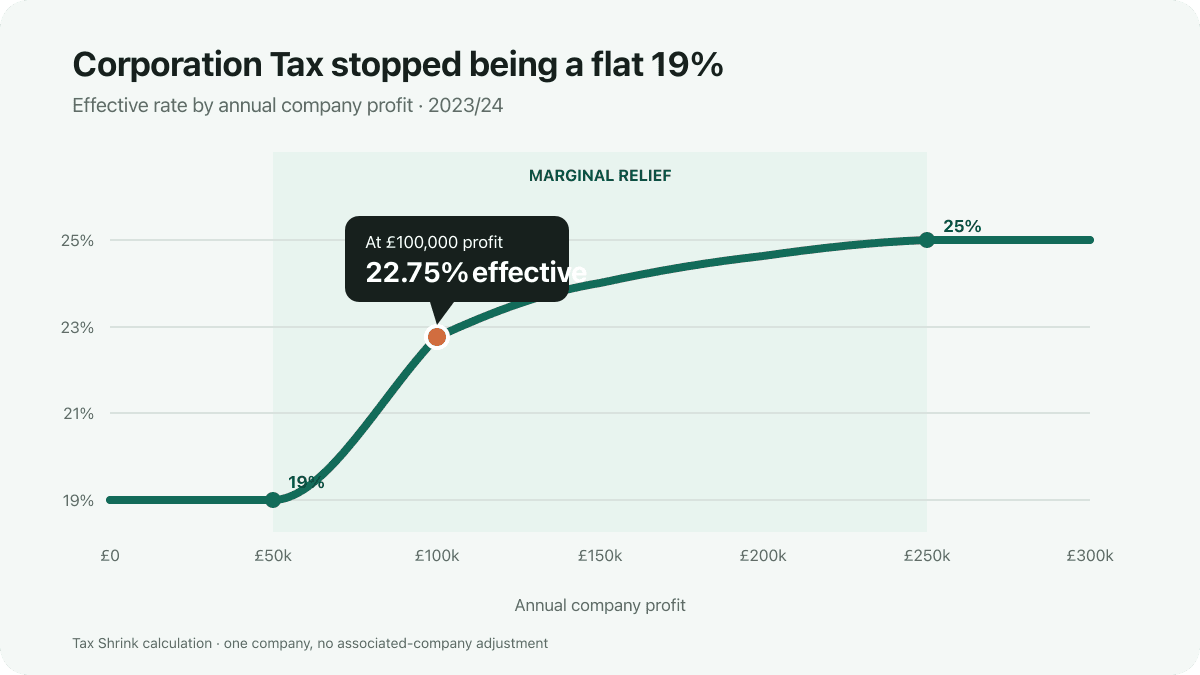
From 1 April 2023, a company with taxable profits of £50,000 or less could qualify for the 19% small profits rate. Profits above £250,000 were charged at the 25% main rate. Marginal relief softened the transition between those limits.
For the £100,000 example:
- tax at the 25% main rate before relief:
£100,000 × 25% = £25,000; - marginal relief:
(£250,000 − £100,000) × 3/200 = £2,250; - Corporation Tax after relief: £22,750.
Director salary and employer National Insurance are normally deductible company costs, so a remuneration decision can also change the profit on which Corporation Tax is calculated.
The £50,000 and £250,000 limits are reduced for short accounting periods and divided between associated companies. A period straddling 1 April 2023 also needs day-based apportionment. Those cases sit outside this example; GOV.UK explains the adjustments (opens in new tab).
The smaller dividend allowance created another cost
The dividend allowance fell from £2,000 in 2022/23 to £1,000 in 2023/24, while the dividend rates remained 8.75%, 33.75% and 39.35%. If the extra £1,000 exposed to tax remained in the basic dividend band, the smaller allowance added £87.50 to the personal tax bill.
The allowance is a zero-rate band, not extra room in the basic-rate band. Dividends still sit on top of salary and other income when their rate is determined. These dividend rules apply in Scotland too; Scotland sets rates for non-savings, non-dividend income, not dividends.
The focused guide to the £500 Dividend Allowance follows the second reduction into 2024/25 and explains why allowance-covered dividends still occupy band capacity.
A January NI cut complicated the annual director figure
The employee main rate was 12% from 6 April 2023 to 5 January 2024, then 10% from 6 January 2024. The upper employee rate remained 2%, while employer National Insurance remained 13.8% above the relevant Secondary Threshold.
Directors usually have an annual earnings period for National Insurance. HMRC's published Category A director rate for the main band was 11.5% for the full 2023/24 year. That is why a director calculator can show a different 2023/24 figure from a payslip calculator covering only the months after January.
For a director using the annual earnings method, the useful planning figure is therefore 11.5%, not 10% applied to the whole year. Tax Shrink uses that published annual rate. Appointment dates, different category letters and alternative payroll methods need HMRC's company-director National Insurance guidance (opens in new tab) or a payroll calculation.
Scotland widened the salary-tax gap
In England, Wales or Northern Ireland, the Additional-rate threshold fell from £150,000 to £125,140. Scotland raised its Higher rate from 41% to 42%, its Top rate from 46% to 47%, and brought the Top-rate threshold down to £125,140.
Worked example: £50,000 salary only
For a person with the standard allowance and no other income, the Income Tax bill was approximately:
- £7,486.00 in England, Wales or Northern Ireland;
- £9,038.48 in Scotland.
The £1,552.48 difference is salary Income Tax only; National Insurance and dividends are unchanged in this comparison. Both figures assume the full Personal Allowance, which starts tapering above £100,000 of adjusted net income. Scottish status follows the taxpayer rather than the company's registered address; HMRC explains who pays Scottish Income Tax (opens in new tab).
What to do with a 2023/24 calculation
First establish whether the company's period fell wholly after 1 April 2023 and whether it had associated companies. If either answer complicates the statutory limits, the £100,000 example and Tax Shrink's optimiser are not enough on their own.
For the straightforward case, open the £50,000 salary comparison with Scotland selected and switch region to see the difference. The tax-rate reference records the source figures; the methodology explains the calculator's boundary.
Official sources
- HMRC: Income Tax rates and allowances, current and previous years (opens in new tab)
- HM Treasury: Autumn Statement 2022 (opens in new tab)
- HMRC: Corporation Tax rates (opens in new tab)
- HMRC: employer rates and thresholds for 2023/24 (opens in new tab)
- Scottish Government: Scottish Income Tax 2023/24 (opens in new tab)
Continue the series
Next: UK director tax changes in 2024/25, when employee National Insurance fell again, the dividend allowance halved again and Scotland introduced its Advanced rate.